
Equipment buying & work planning
Aircraft Ladders: Measure the Aircraft Interface First
An aircraft access ladder must place the user at the task without contacting sensitive surfaces. Aircraft model and configuration matter more than a general ladder description.
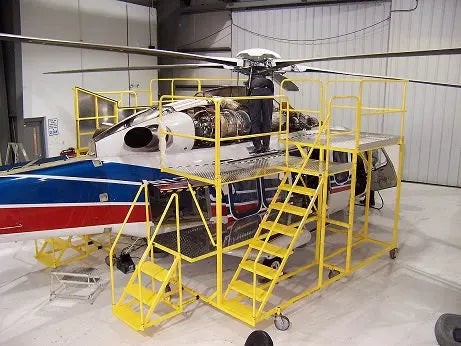
Measure the aircraft interface in the maintenance configuration
Aircraft access starts with the exact model, variant and service task. Record sill or working height, approach direction, fuselage clearance and nearby projections. Include panels, doors or components that move during the job, and configuration changes that affect the aircraft's position relative to the floor. Similar overall aircraft dimensions do not establish ladder compatibility.
Show where the user stands and how tools enter and leave. Check access width, rails, the complete ladder base and space for positioning. Protective padding can reduce certain contact concerns within an approved arrangement, but it does not correct incompatible geometry or justify positioning equipment against an unreviewed aircraft surface.
Compare dedicated and shared access using a fit matrix
List aircraft-and-task combinations with their required positions and constraints. Ask the quotation to identify the proposed configuration for each supported combination, including adjustment and locking instructions. Mark unresolved interfaces and excluded uses. A nominal height range is only one input to the fleet comparison.
Include storage, movement paths and simultaneous maintenance demand in the purchasing decision. At acceptance, compare the delivered ladder and selected options with the approved drawing and intended tasks. Keep the reviewed coverage available to crews. This helps avoid a shared ladder being assigned to a superficially similar aircraft configuration for which fit has not been established.
| Interface | Information to record | Question to resolve |
|---|---|---|
| Aircraft | Model, variant and service configuration. | Which intended uses have actually been reviewed? |
| Working point | Height, approach, open doors and projections. | Can the user reach the task within the approved arrangement? |
| Equipment | Full base, access, rails and protective details. | Does the complete ladder fit without uncontrolled contact? |
| Operation | Hangar route, positioning, storage and inspection. | Can the team use the same approved method consistently? |
Review checklist
- Aircraft model and variant
- Service point and clearance
- Available hangar approach
Buyer questions
Does matching the height prove compatibility?
No. The ladder also needs appropriate geometry, clearances and an approved arrangement for the intended aircraft task.
What should the aircraft sketch identify?
Include model and variant, service point, floor reference, approach direction and the clearances that must be maintained.
Does aircraft compatibility transfer between variants?
Do not assume so. Compare the actual service-point geometry, clearances and configuration for each intended variant. A shared name or similar appearance does not establish that rails, approach or working height match. Record unverified applications until an appropriate interface review is completed.
What should accompany an aircraft ladder quote request?
Provide aircraft identification, authorized photographs, a dimensioned service-point sketch, intended tasks and loads, and the route to the position. Identify changes in aircraft configuration and any unresolved measurements. Ask for the exact proposed equipment and compatibility limitations in the response.