
Equipment buying & work planning
Fall Prevention Around Aircraft: Review the Whole Access Route
Fall exposure around aircraft can occur during entry, work and exit. Review the complete route rather than focusing only on the final platform position.
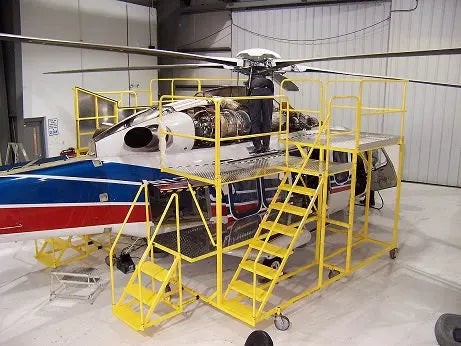
- Map the route
Include transitions and work edges.
- Review aircraft state
Show changing gaps and panels.
- Coordinate protection
Use appropriate instructions and requirements.
- Control movement
Keep crews and equipment aligned.
Trace exposure from approach to exit
Aircraft fall exposure can change during approach, transition and work. Map where technicians climb, enter a platform, reach the service point and leave. Include gaps caused by opened panels, removed parts or repositioned stands. A protected position at one stage should not be treated as approval of every transition in the maintenance sequence.
Use the aircraft's applicable access information and the reviewed ground-equipment configuration. Do not assume aircraft skin is an approved standing surface or anchor because it is close to the task. Padding or proximity to the aircraft does not replace a fit and protection review for the actual operation.
Coordinate equipment movement and changing work
Have the responsible maintenance and safety teams review access, protection and response arrangements together. Identify who positions stands, who authorizes movement and how other crews are informed. Moving a platform for one task can change another technician's route or working edge. Include tools and parts so staging does not obstruct the planned access.
Record changes that require reassessment, including aircraft state, platform location and simultaneous activity. For purchasing, request the actual drawings, limitations and required interfaces rather than a broad aviation-use claim. This keeps access equipment aligned with the maintenance plan without treating a buying guide as a task-specific protection design.
| Area | Show | Review |
|---|---|---|
| Route | Approach, access, transitions and exit. | Where exposure changes during the task. |
| Aircraft | Variant and service configuration. | Permitted surfaces and actual clearances. |
| Protection | Reviewed equipment and system arrangement. | Compatibility with task and applicable requirements. |
| Coordination | Movement, tools and other crews. | How the approved access remains controlled. |
Review checklist
- Access and exit routes
- Work-edge gaps and changes
- Approved protection arrangements
Buyer questions
Can a platform be positioned by eye alone?
Use the approved placement and fit procedure; visual approximation may miss gaps or aircraft contact risks.
Does aircraft skin provide a safe standing surface?
Do not assume so. Use the aircraft's approved access instructions and the applicable task-specific arrangements.
Can padding against an aircraft substitute for a fit review?
No. Protective details may be part of an approved interface, but they do not establish clearance, support or an appropriate working position. Review the actual platform and aircraft configuration and avoid uncontrolled contact. Keep the approved placement and limitations available to those positioning equipment.
What changes should prompt a new aircraft access review?
Aircraft movement, service-state changes, different tasks, relocated ground equipment and altered tool or component handling can affect access. Use the responsible coordination process and reassess the changed interface rather than relying on a previous position or an approximate visual match.
References & further reading
Use the applicable requirements and the specific equipment instructions for your work. General references do not establish approval of a product or installation.