

Pallet Rack Back Guard
Pallet Rack Back Guard — Dock Protection. Minimize the potential hazard of product falling out the back of pallet rack.
Equipment collection
42 products in this collection
Facility barriers and protective equipment need to match a defined hazard and installation location. Identify the intended function before comparing products.
Review the models and documented specifications below. Include protective function, location and mounting conditions in your quote request so the proposed configuration can be checked against your application.
Models in this collection 3 shown
Select models and tell us about your application.
Our team reviews your request and any open questions.
Compare the configuration, quantities and included items.
Select models to compare or request together. Your selection stays available as you browse.
No products selected
Showing 24 of 24 on this page • 42 in this category
Page 1 of 2
Pallet Rack Back Guard — Dock Protection. Minimize the potential hazard of product falling out the back of pallet rack.
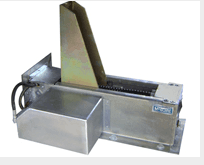
“HOLD-TITE®” Automatic Vehicle Restraint. Push button activation with PLC solid state controls (115 volt - single phase operation); Includes 3 position keyed override.
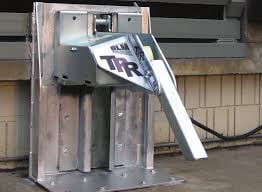
“TPR™” Automatic Vehicle Restraint. Low Profile 9” Carriage - Service Range 9”to 27” Off Grade; Restraining Force In Excess of 30,000 lbs.
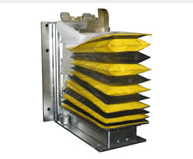
“STOP-TITE®” Automatic Vehicle Restraint. Push button activation (115v single phase operation) with automatic light sequencing of inside/outside red/green lights; Designed to accommodate rear impact guard (RIG) outlined in 1998 NHTSA regulation.
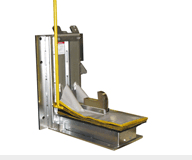
“STOP-TITE®” Manual Vehicle Restraint Series. Designed to accommodate rear impact guard (RIG) outlined in 1998 NHTSA regulation; Manually activated restraint via an operate handle.

Barrier Lip. 5” high standard barrier on deck edge with 7” high optional; Rated to withstand being impacted by a 10,000 lb load moving at 4 m.p.h.

Bar Lift Barrier. A standard 1.5 HP self-contained power unit, 115 volt single phase standard; Rated to withstand impacts by a 10,000 lb. load moving at 4 mph.

Dock Chain Barrier Bollard System. Listed models: DCBB-42-4.5, DCBB-42.5.5; DCBB-42-4.5 Overall Height: 42".

Economy Trailer King Pin Lock. E-TKPL Height: 3.25"; E-TKPL Inside Diameter: 3".

Trailer Lock Systems. Listed models: TL-100-F, TL-100-F-S, TL-100-F-S-LED, TL-200-HP-F and additional configurations; TL-100-F Description: Electric Hydraulic, Aluminum Light Pkg. 115 V, 1 PH.

Steel Wheel Alignment Curbs. Listed models: SWAC-92, SWAC-144; SWAC-92 Height: 8-15/16".

Rubber Wheel Chocks — Dock Protection. Constructed of reinforced rubber to provide a sure grip on virtually any surface.

Aluminum Wheel Chocks. Listed models: EALUM-7, EALUM-7-HNDG, EALUM-YEL, EALUM-7-H and additional configurations; EALUM-7 TYPE: A.

Steel Wheel Chocks. Listed models: SWC-22, MS-15, SSC-17, FAB-8 and additional configurations; SWC-22 TYPE: A.

Molded Urethane & Plastic Wheel Chocks. Listed models: URWC-2*, URWC-8, URWC-8-HDL, URWC-15* and additional configurations; URWC-2* Description: Mini-urethane chock.

Railroad Car Chocks. Listed models: FRC-2, SRC-1; FRC-2 Description: Flag Rail chock w/adjustable height leg.

Magnetic Rail Car Wheel Chock - RC-WC. RC-WC Size (WxLxH): 2-1/4"x11"x3-5/8"; RC-WC Net Wt. (lbs.): 3.

Wheel Chock Accessories. Holds up to 40 pounds in a usable width of 10-3/4"; Overall size is 12-7/8"W x 7-7/16"D x 6-7/16"H.

Rubber Wedges. Listed models: RBW-2, RBW-3, RBW-5, RBW-10; RBW-2 Width: 4".

Aluminum Wheel Risers — Dock Protection. Elevate semi-trailers to loading docks for maximum serviceability during loading and unloading operations.

Steel Wheel Risers — Dock Protection. The Steel Wheel Riser is equipped with fork slots for ease in fork truck transporting.

Protecting Cable Guards. Listed models: MRHR-39, MRHR-39-YL, MRHR-39-BG; MRHR-39 Color: Black.

Recycled Plastic Parking Stops — Dock Protection. Car Stops Car Stops Protecting people and property from drivers in dangerous areas.

Parking Stops with Raised Lettering — Dock Protection. Car Stops Car Stops 1 Our Car Stops with can be ordered with or without lettering on the car stop (Visitor, Handicap..) Lettering is raised and easy to read with over 2” Font that is molded into the part and won't wear or fade with age.
Start your dock protection comparison with protective function, location and mounting conditions. Choose a model around the job it must perform and the space in which it will be used. The product grid is a shortlist, not a substitute for reviewing the individual model specifications. Similar product names can describe different sizes, configurations or operating limits.
Describe the opening, edge, traffic exposure or support task and provide mounting dimensions and substrate details. For stabilizing equipment, include trailer and support conditions. Do not treat a traffic barrier as fall protection, or a stabilizer as a lifting device, without documented suitability.
Open each product page to review the available specifications and supporting details. Where a dimension, material or rating is not listed, include that requirement in your request so it can be clarified. A missing specification should not be interpreted as a match.
Before requesting pricing, note your preferred model, quantity and any configuration requirements. Describe the application in plain language and identify the constraints that matter most. If you are comparing alternatives, select those models for one request and explain whether you need an equivalent option or a different configuration. This helps our team understand the comparison without treating every selected item as a separate purchase.
UNDERSTANDING YOUR QUOTE
A quote for dock protection depends on dimensions, construction, mounting and documented performance. Quantity can affect the overall proposal, but a discount should not be assumed. Optional features and a different configuration can change the comparison even when the base product looks similar. Identify any custom dimensions or material requirements separately so their feasibility and effect on pricing can be reviewed. Ask for the quoted configuration and included items to be identified clearly before making your decision.
Download equipment catalogsUse the catalog to compare models, then confirm current requirements with our team.
Browse adjacent categories to find the closest match for your application.
No. Identify the hazard and required function, then review the specific product documentation. Traffic control, impact protection, gate closure and edge protection are different tasks; their ratings and installation requirements are not interchangeable.
Key variables include dimensions, construction, mounting and documented performance. Include quantities and any requested changes so the quote can identify the specific configuration. Custom requirements need review; do not assume every model can be modified.
Yes. Select products using “Include in quote,” review your selection, then open one quote request. Your selected model names and product links are carried into the message. Add the quantity for each item and tell us whether the models are alternatives or items you need together.
Our team reviews the models and application details you provide. If more information is needed, we can clarify the requirements before preparing a proposal. Review the model, configuration, quantities and included items in the quote before proceeding.
Helpful guides and updates related to this category.
Loading Dock Equipment: Build a Site-Specific List
A dock equipment list should follow the transfer process. The facility's vehicles, handling equipment and traffic determine what belongs on it.
Loading Dock Equipment: Build the Specification Around the Vehicles
The right dock equipment depends on the vehicle mix, dock geometry and transfer method. Start with the loads and vehicles the facility actually handles.
Tell us about your application, height, or workspace requirements and we’ll help you identify the right equipment.
No obligation • Industrial equipment specialists