Equipment buying & work planning
Hydraulic vs. Electric Scissor Lifts: Avoid a False Comparison
Electric and hydraulic do not always describe competing lift types. An electrically powered machine may use a hydraulic lifting system, so clarify what each specification means.
Separate energy supply from propulsion and lifting actuation
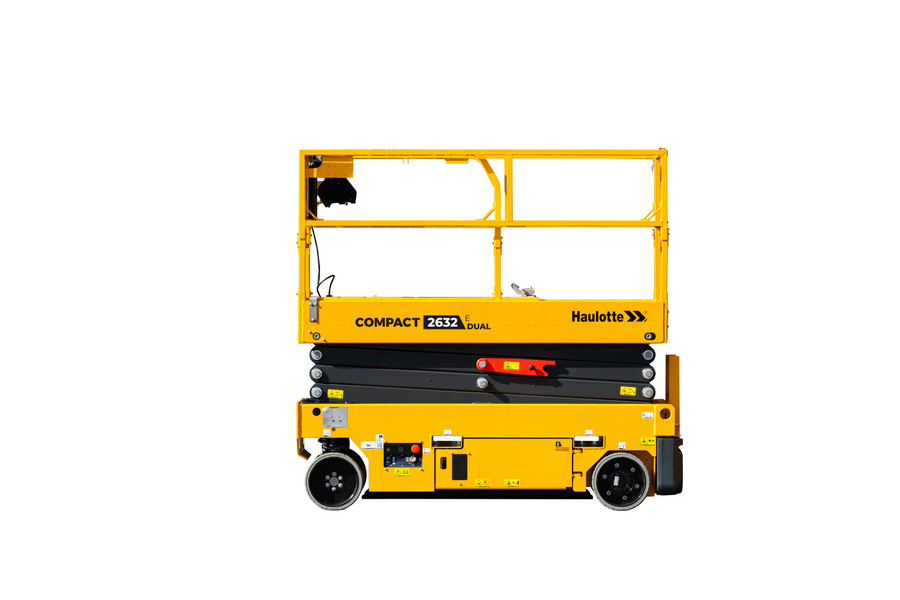
Electric and hydraulic do not necessarily describe competing scissor-lift categories. An electrically powered machine can use hydraulics to raise the platform. Ask the proposal to identify the energy supply, travel system and lifting mechanism separately. An electric label does not by itself mean the machine has no hydraulic fluid or related service requirements.
Specify the application before ranking the drive design. Record platform position, load, route, supporting conditions and environment. Request the actual model's permitted use. A mechanism label does not establish outdoor suitability, hazardous-area approval, cleanliness or a universal noise or emissions advantage.
Compare support requirements under equivalent work
Use the same task, duty and operating period for each candidate. Include charging or other energy arrangements, maintenance access and approved fluids or components where relevant. Compare the supplier's documented information rather than assuming one system has lower operating cost from its name alone.
For a process-sensitive application, describe the complete assembly requirements and have the appropriate facility team review them. Keep those conditions distinct from ordinary lifting performance. The purchasing conclusion should identify which documented configuration fits the job and available support, not declare a universal winner between terms that can describe the same machine.
| Field | Record separately | Avoid |
|---|---|---|
| Energy | Battery, electrical supply or other stated source. | Inferring actuation from the power label. |
| Travel | Propulsion and route requirements. | Assuming all electric models move identically. |
| Lift | Actual raising mechanism and service information. | Assuming electric means no hydraulics. |
| Application | Load, space, environment and duty. | Selecting from terminology instead of documented fit. |
Review checklist
- Travel and lift systems
- Energy supply and charging
- Required operating environment
Buyer questions
Can an electric scissor lift have hydraulics?
Yes. Electric power and hydraulic actuation can be used in the same machine; confirm the model's actual design.
Does hydraulic mean diesel powered?
No. Hydraulic describes an actuation method; the energy source can be electric or another approved configuration.
Can an electric scissor lift still require hydraulic maintenance?
Yes, depending on its design. Confirm the actual lifting and travel systems and follow the model's service information. Do not infer fluid-free operation or maintenance requirements from an electric label. Compare complete configurations rather than isolated words in product descriptions.
Should cleanliness requirements determine the drive choice alone?
Review the full equipment and process, including fluids, containment, surfaces, controls and maintenance as relevant. One mechanism does not establish overall suitability. Ask the responsible process team to define evidence and compare proposed models against those requirements as well as the mechanical task.
References & further reading
Use the applicable requirements and the specific equipment instructions for your work. General references do not establish approval of a product or installation.