
Equipment buying & work planning
Aircraft Boarding Stairs: Maintain Surfaces, Rails and Interfaces
Boarding stairs need a maintenance plan appropriate to their model, exposure and use. The passenger route includes the platform, steps and aircraft transition.
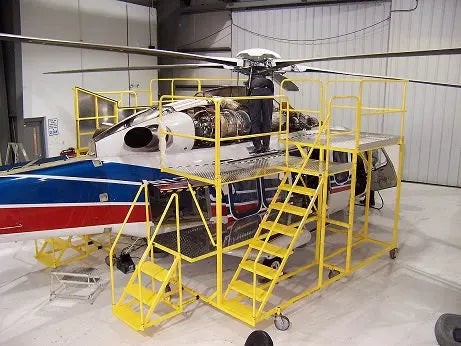
- Identify the assembly
Use current model information.
- Inspect route and function
Record separate findings.
- Review positioning
Confirm the approved aircraft interface.
- Control service status
Retain repairs and release decisions.
Inspect walking surfaces and positioning functions
Aircraft boarding stairs need review of the whole access route and the functions that keep the unit appropriately positioned. Inspect surfaces, rails, locks, wheels and controls where fitted, using the actual equipment instructions. Record wear, damage and changed operation. Appearance alone is not evidence that the positioning or restraint arrangement functions correctly.
Review the aircraft-facing interface in the approved configuration. Aircraft state or task changes can affect clearances and transitions. A stair that reaches the sill can still have an unsuitable landing or positioning problem. Coordinate use and removal with the responsible ground team rather than compensating through informal adjustments.
Keep repair decisions and configuration identity traceable
Use approved cleaning, lubrication, repair methods and parts information. A similar-looking component or readily available coating should not be assumed suitable for every stair assembly. Record the equipment identity, defect and work performed so return-to-service decisions remain connected to the original issue.
For replacement equipment, include aircraft interfaces, movement, storage and service access in the brief. Compare the exact configuration and included support rather than height alone. Clear maintenance and purchasing records help avoid an apparently available stair remaining unusable while a compatibility or unresolved functional defect is investigated.
| Check | Record | Purpose |
|---|---|---|
| Walking route | Surfaces, steps, platforms and rails. | Complete access-path condition. |
| Function | Wheels, locks and controls where fitted. | Operation beyond visible appearance. |
| Interface | Aircraft configuration and placement. | Approved transition and clearance. |
| Service | Work, parts and return decision. | Traceable readiness status. |
Review checklist
- Equipment identification
- Surface and interface condition
- Service and defect records
Buyer questions
Can worn steps be ignored if the rails are intact?
No. The walking surface is part of the access system and must be assessed under the approved inspection process.
What should a service record include?
Identify the equipment, reported condition, approved work performed and the responsible return-to-service decision.
Why should aircraft stair positioning be reviewed after a configuration change?
Aircraft height, projections or service state can change the interface even when the stairs are unchanged. Use the approved placement and equipment information and have affected clearances reviewed. A previous fit or an apparently correct height should not be treated as universal permission for a new arrangement.
Can similar-looking replacement parts be used on boarding stairs?
Use the actual approved part information and repair process. Appearance or matching dimensions do not establish equivalent material or function. Keep the equipment identity, work and responsible return decision traceable so a substitution does not silently alter the intended positioning or walking system.