
Equipment buying & work planning
Articulating vs. Telescoping Boom Lifts: Match the Access Path
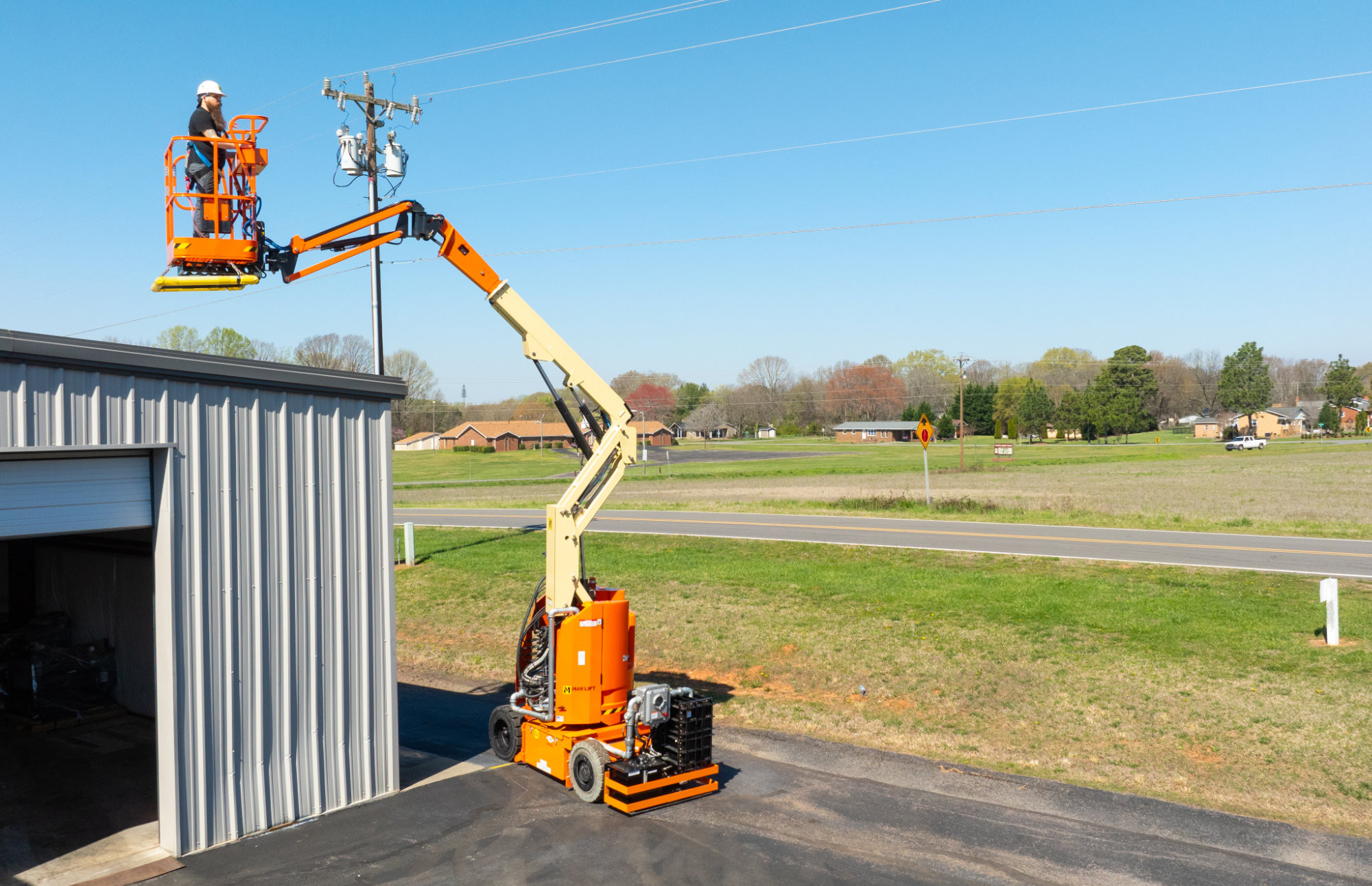
Articulating booms use jointed sections to position around obstacles; telescoping booms extend along a more direct path. The available setup location often determines which approach is workable.
- Plot the work
Locate the target and possible base.
- Show obstacles
Include full profiles and movement clearance.
- Check the chart
Use the actual load and configuration.
- Compare coverage
Separate normal tasks and exceptions.
Plot the obstacle and required platform positions
Articulating and telescoping boom lifts provide different access paths. Jointed geometry can help position around certain obstructions, while an extending boom can suit a more direct approach. The actual reach chart determines useful coverage. Measure target elevation, horizontal distance and the near edge, far edge and height of any obstacle from a feasible base location.
Include the boom's movement and rotation, not just the final basket position. A platform may reach the destination while another part of the machine conflicts with a structure. Show chassis access, supporting conditions and setup space on the same sketch. Maximum height does not resolve an outreach or base-position problem.
Read the model's chart at the intended load
Describe occupants, tools and materials and use the chart conditions for that load and configuration. Do not combine separate maximum height and outreach figures into one assumed position. Ask the supplier to explain any load zone, extension or notation affecting the required task, especially where the work point lies near an operating boundary.
Compare routine jobs and demanding exceptions using the same site measurements. Include platform space, daily repositioning and support needs in the ownership review. Record the applications covered by each proposal and any exclusions. This makes a purchase comparison more useful than choosing articulating or telescoping geometry from a general preference.
| Review | Information needed | Question to resolve |
|---|---|---|
| Work point | Elevation and outreach from a feasible base. | Is this position permitted at the intended load? |
| Obstruction | Full profile and movement path. | Can the complete boom approach without conflict? |
| Base | Access, rotation and supporting conditions. | Can the machine be positioned and operated there? |
| Fleet tasks | Recurring jobs and demanding exceptions. | Which jobs each proposed model actually covers. |
Review checklist
- Target location
- Obstacle profile
- Ground and rotation clearance
Buyer questions
Is a telescoping boom always longer reaching?
Compare the specific models' operating envelopes; equipment type alone does not establish usable reach or capacity.
What if the platform reaches but the chassis cannot get close enough?
Reassess the base location and reach envelope together; a brochure maximum does not overcome an unsuitable setup location.
Is an articulating boom always better around obstacles?
Jointed geometry can help certain access paths, but compare the actual envelope, platform position and movement with the obstruction. Base access, rotation and supporting conditions still apply. A general description of articulation does not prove that a particular machine can complete the intended approach.
What if two charts use different working-height descriptions?
Return to the measured task and required platform position. Ask each supplier to explain the relevant figures and confirm the position at the intended load and configuration. Keep platform elevation, assumed reach and outreach distinct so terminology does not create a false comparison.
References & further reading
Use the applicable requirements and the specific equipment instructions for your work. General references do not establish approval of a product or installation.