
Equipment buying & work planning
Telescopic and Articulating Booms: Read the Reach Diagram
A boom type describes its geometry, not its suitability for a particular work point. The reach diagram shows which platform positions the proposed model can achieve.
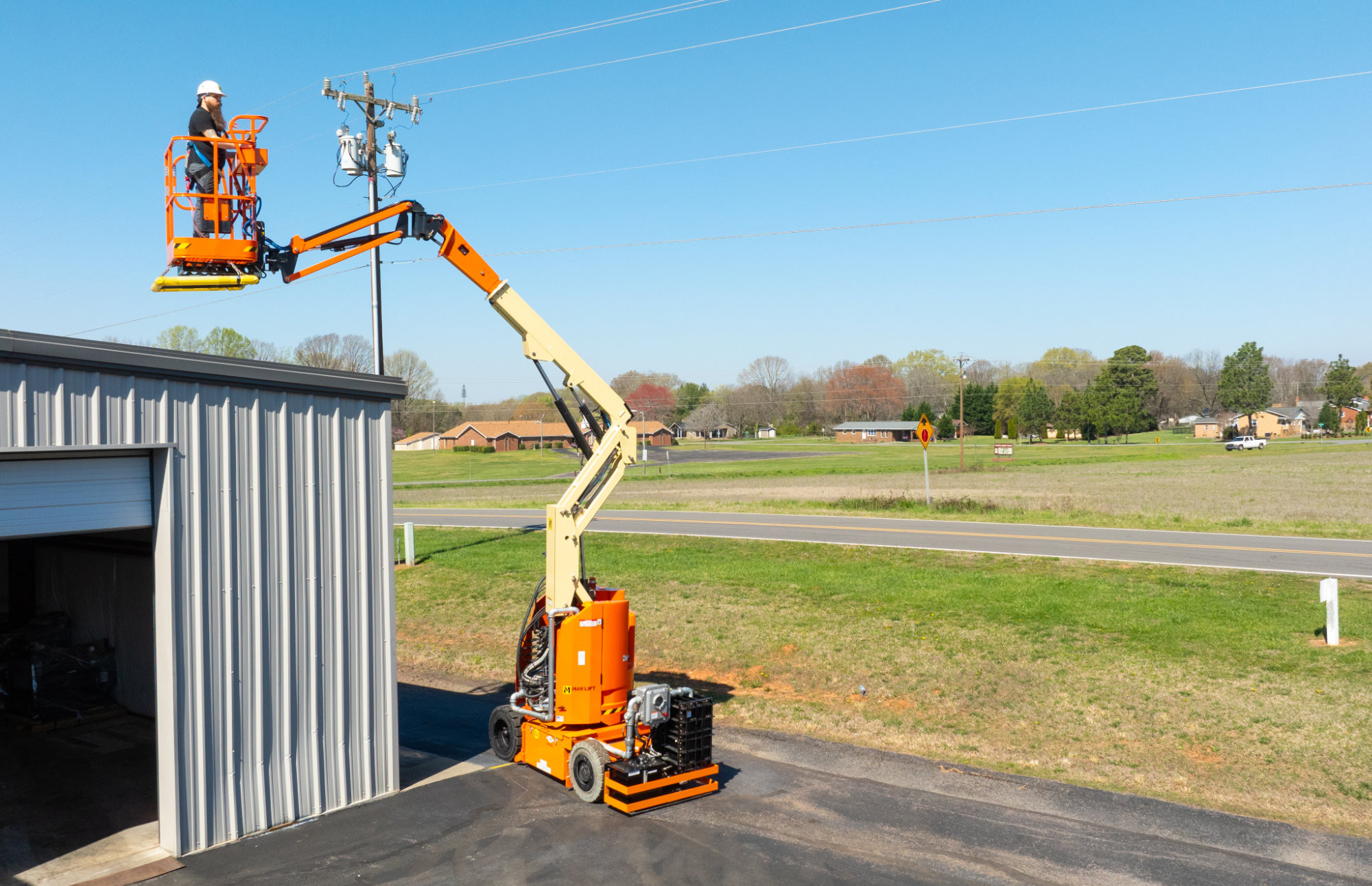
- Plot the target
Use verified site coordinates.
- Add obstructions
Include the movement path.
- Apply model conditions
Check load and configuration.
- Resolve uncertainty
Retain clarification with the proposal.
Plot the task using the chart's reference points
A boom lift reach diagram shows permitted positions under specified conditions, not a set of independent maximums that can be combined. Measure target elevation, horizontal distance, obstacles and the proposed base position. Use the manufacturer's stated reference points when relating site dimensions to the diagram; a working-height figure may include an assumed person reach rather than platform elevation.
Show both edges and the highest point of an obstruction. Include the boom's approach, rotation and clearance between positions, not just the final basket location. A point inside the chart is useful only if the machine can reach a suitable setup location and complete the required movement without conflicting with the site.
Apply the actual load and configuration conditions
Provide occupants, tools and materials and identify selected extensions or other configuration choices. Ask which chart zone and limitations apply. Do not carry a capacity from one position into another without support from the actual model information. If the job lies near an envelope boundary, obtain clarification before selecting the equipment.
Send the supplier a dimensioned sketch and the precise question to resolve, rather than asking whether a machine can reach a vague location. Compare candidates against the same normal tasks and exceptions. Keep the confirmed model, chart and reviewed coverage with the purchasing record so later job assignments do not rely on an isolated headline specification.
| Input | Send to the supplier | Confirmation needed |
|---|---|---|
| Target | Measured elevation and outreach. | Permitted position at intended load. |
| Obstacles | Full profile and approach path. | Clearance of the complete moving machine. |
| Setup | Feasible base, support and rotation. | Applicable configuration and conditions. |
| Uncertainty | Specific unclear chart notation. | Written explanation tied to the proposed model. |
Review checklist
- Measured target coordinates
- Obstacle dimensions
- Model-specific load and reach data
Buyer questions
What should I ask when a chart is unclear?
Request confirmation of the permitted configuration and load for the measured work point, including the approach and setup requirements.
Can a working-height figure replace the reach chart?
No. Working height may use assumptions about reach and does not describe the whole envelope. Provide the measured task and required platform position and review the actual chart at the intended load. Keep elevation and horizontal access distinct so terminology does not create a false fit.
What if a required point sits near an envelope boundary?
Do not assume practical coverage from a rough drawing. Provide verified dimensions and obtain appropriate confirmation for the exact model and configuration, including the approach and site conditions. Resolve uncertainty rather than treating a brochure outline as a substitute for a reviewed application.
References & further reading
Use the applicable requirements and the specific equipment instructions for your work. General references do not establish approval of a product or installation.