
Equipment buying & work planning
What Dock Levelers Do—and What They Do Not Replace
A dock leveler provides a transition between the loading dock and a vehicle. It does not by itself resolve vehicle restraint, pedestrian separation or every vehicle-height mismatch.
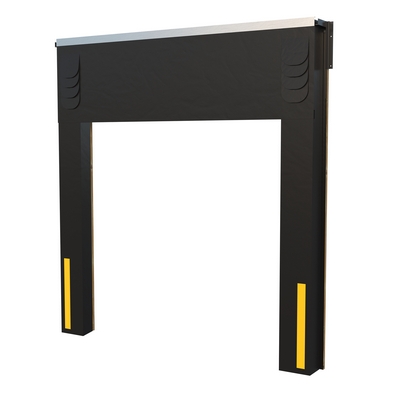
Treat the leveler as one part of the dock transfer
A dock leveler bridges the transition between dock and vehicle within the proposed design's operating conditions. It does not by itself establish a complete vehicle-restraint, traffic-control or loading arrangement. Record the vehicle bed range, dock geometry, handling equipment and transfer pattern before judging whether an existing unit suits the operation.
Review the vehicle interface and lip engagement using the actual manufacturer information. Include the surrounding structure and adjacent equipment. A suitable leveler can still be part of an unsuitable system if the vehicle moves, the approach is obstructed or another component is incompatible with the transfer.
Plan for vehicle exceptions and service access
Identify arrivals outside the normal range before they reach the bay. A portable dock plate and a permanently installed leveler should not be treated as interchangeable solely because each connects two surfaces. Ask for the rating and intended application for the complete movement, including the actual handling vehicle and load.
Keep inspection, maintenance support and defect reporting in the operating plan. For replacement equipment, compare installation scope and how the bay will be managed during the work. A documented review avoids relying on operators to compensate for an unsuitable transition and gives procurement a defined requirement instead of a request for a generally higher rating.
Review checklist
- Vehicle height range
- Combined handling load
- Restraint and traffic procedures
Buyer questions
Can a leveler serve every vehicle at a dock?
Only within its approved range and configuration; exceptional vehicles may require a separate loading method.
Can an operator compensate for an unsuitable transition by driving slowly?
Reduced speed does not establish equipment compatibility or an approved loading method.
Is a dock leveler the same as a portable dock plate?
No. Their support, ratings and operating arrangements can differ. Describe the actual transfer and ask for the appropriate equipment and instructions rather than treating both as interchangeable bridges. Review vehicle, dock and handling conditions for the complete proposed use.
Can a suitable leveler replace vehicle restraint procedures?
No. The transition and vehicle-control functions need to be reviewed as parts of the complete dock operation. Follow the applicable site procedure and equipment information. A successful bridge between surfaces does not establish that the vehicle or surrounding work area is otherwise controlled.
References & further reading
Use the applicable requirements and the specific equipment instructions for your work. General references do not establish approval of a product or installation.