
Equipment buying & work planning
Lift Table Environmental Impact: Compare the Full Service Life
A lift table's environmental impact cannot be judged from the drive type alone. Consider expected use, service life, maintenance and end-of-life handling.
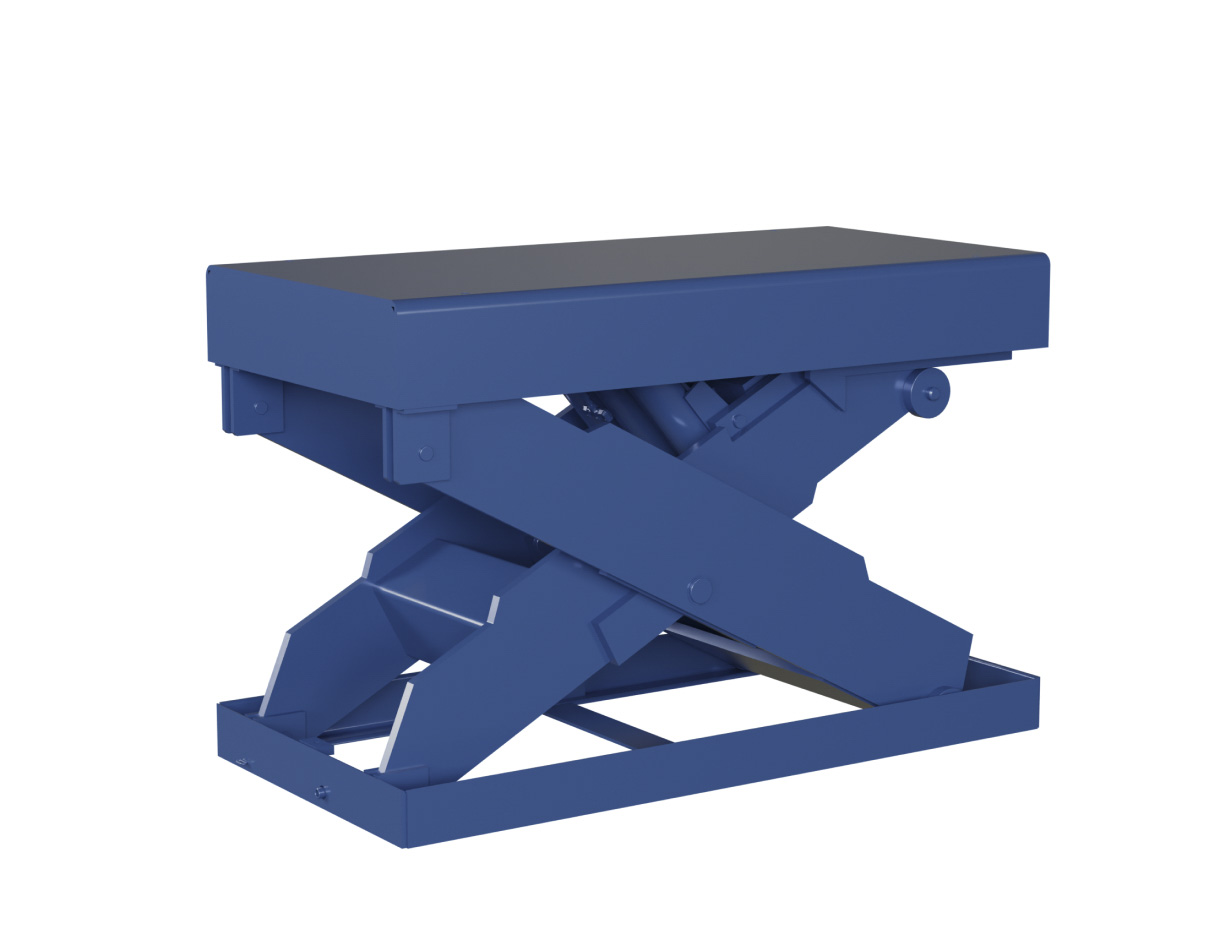
Compare equivalent load handling and operating duty
An environmental comparison needs a defined function. State the load, movement, operating period and cycle pattern each table must support. Comparing one model's idle consumption with another's loaded cycle does not establish an energy advantage. Distinguish measured information from estimates and request data for the actual configuration proposed.
Include supporting systems. A pneumatic table depends on a compressed-air supply; an electrically powered hydraulic design has its own equipment and service requirements. Material or actuator labels alone do not describe the energy used to perform the job. Keep the boundaries of the comparison consistent across the alternatives.
Include maintenance, repairability and process effects
Review service parts, fluid requirements where relevant, access for maintenance and the expected support arrangement. Consider end-of-life requirements using information available for the actual equipment. Avoid assigning a universal environmental ranking to pneumatic, hydraulic, aluminum or steel construction without a comparable basis.
Equipment can also change product damage, handling or rework, but those effects need site evidence. An ergonomic improvement does not automatically establish an environmental saving. Keep operating assumptions and process measurements with the proposal so purchasing can distinguish a documented benefit from a broad green claim or an unrelated historical company recognition.
| Area | Comparable evidence | Misleading shortcut |
|---|---|---|
| Use | Same loads, travel and cycle pattern. | Different duties compared by one power figure. |
| Support | Energy and services needed by the full design. | Compressed air treated as having no upstream cost. |
| Life cycle | Parts, maintenance and disposal information. | Material label used to promise service life. |
| Process effect | Distinct measured damage or waste changes. | Ergonomic improvement counted as unverified emissions savings. |
Review checklist
- Expected cycles and loads
- Maintenance and replacement parts
- Disposal or recycling arrangements
Buyer questions
Can a material label prove lower environmental impact?
No. The complete design, use, maintenance and disposal need to be considered in a comparable assessment.
Does a pneumatic table always have lower environmental impact?
No. Compare the complete energy supply, actual duty, maintenance and process effects with equivalent alternatives. A drive label does not provide a life-cycle result. Keep assumptions and supporting information explicit rather than transferring a general reputation to a specific workstation.
How should an environmental claim be evaluated in a quote?
Ask what model, use conditions and scope it covers and what evidence supports it. Distinguish measured information from estimates and broad marketing. Compare alternatives on the same basis and avoid treating a company-level statement as proof of every product's operating performance.
