
Equipment buying & work planning
Lift Table Benefits: Where Height Adjustment Adds Value
A lift table can position goods at a more useful working height. Its benefit depends on how loads arrive, how workers reach them and how goods leave.
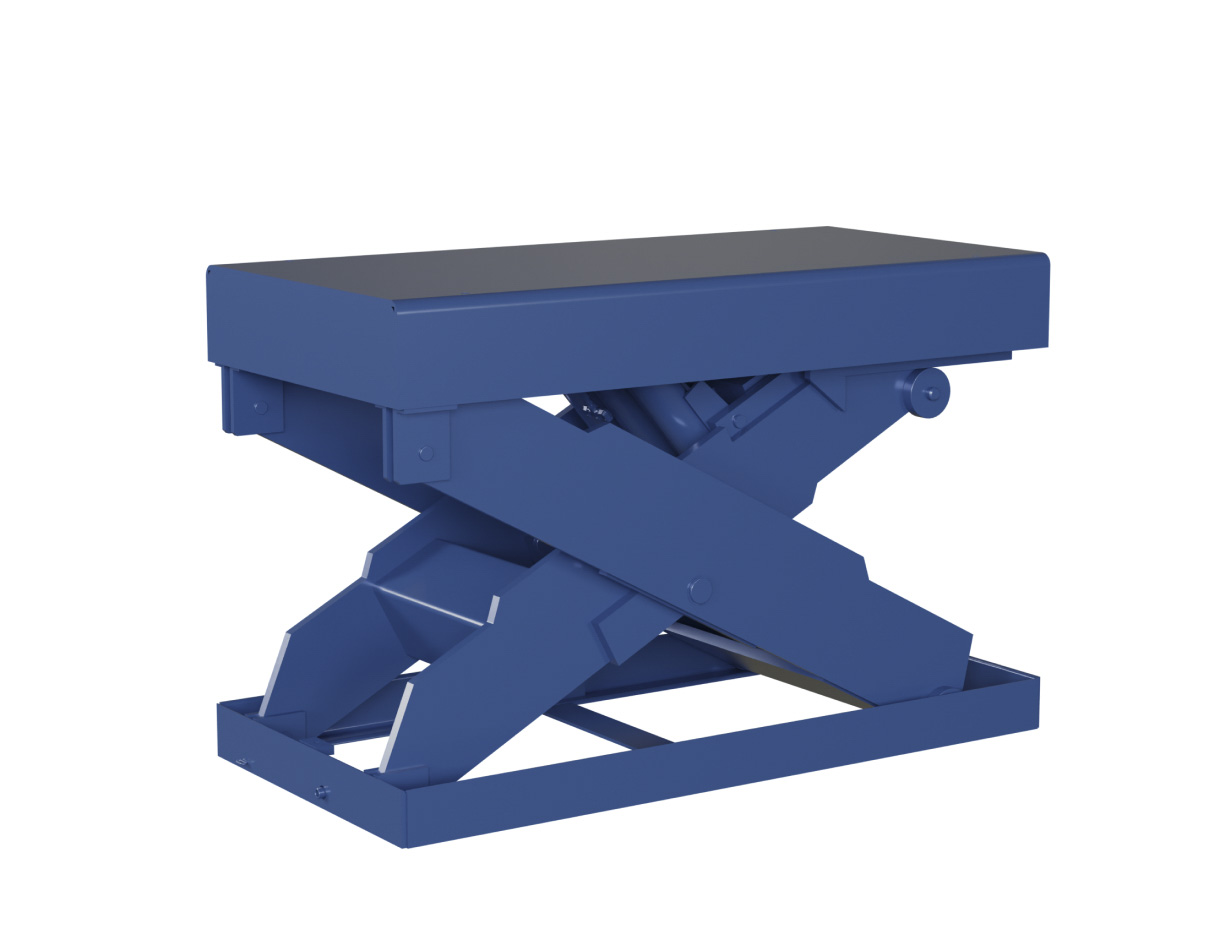
Define the positioning benefit the table must provide
A lift table can address repeated bending, mismatched transfer heights or difficult load presentation, but the desired benefit should be specific. Record pickup, working and delivery positions with the carrier included. A table can improve one vertical interface while leaving a difficult reach, rotation or transfer unresolved.
Describe load dimensions, distribution and the way it enters and leaves the platform. Compare lowered and raised heights, stroke, deck area and control access. Capacity and deck size alone do not establish a suitable workstation. Include fixtures, pallets and containers that change the load's position or underside clearance.
Evaluate the benefit through the whole cycle
Observe loading, work, unloading and replenishment with representative products. Ask users whether the arrangement changes reach, effort or access and whether a connected station takes on additional handling. A table's presence is not proof that the task is ergonomic or that every cycle will become faster.
Use the trial to specify the required function and interfaces in the RFQ. Compare selected controls, energy, maintenance access and support for the actual proposed model. Keep benefits tied to measured work and remaining constraints. This helps procurement distinguish a useful positioning improvement from an equipment feature that does not resolve the station's main problem.
| Potential improvement | Evidence to collect | Remaining question |
|---|---|---|
| Height positioning | Actual task and station levels. | Does the full range fit loading and delivery? |
| User access | Reach, controls and load presentation. | Are other awkward movements unresolved? |
| Transfer flow | Loading, work and unloading cycle. | Is delay moved to another stage? |
| Ownership | Service, protection and inspection needs. | Can the station be supported appropriately? |
Review checklist
- Pickup and working heights
- Load geometry
- Control and maintenance access
Buyer questions
Will a lift table speed every workstation?
No. Test the complete cycle; loading delays or poor positioning can offset faster height adjustment.
Why is deck size not enough?
The load's support, distribution, transfer method and surrounding access determine whether the deck is suitable.
Does a lift table automatically make a task ergonomic?
No. Height adjustment is one feature in a complete task. Review reach, force, orientation, repetition, loading and unloading through the responsible assessment process. Use representative work and identify remaining issues instead of assuming a product description establishes the whole workstation's suitability.
What should be compared when two tables have the same capacity?
Compare actual load conditions, deck, lowered and raised heights, controls, protection, transfer geometry and support scope. Equal capacity does not establish the same loading arrangement or usable station fit. Ask for model-specific information for the task rather than relying on a common headline figure.