
Equipment buying & work planning
Scissor Lift Tables: Load Geometry Matters as Much as Capacity
A material lift table raises goods to a useful working or transfer height. Select it using load distribution and the complete lifting range, not just nominal capacity.
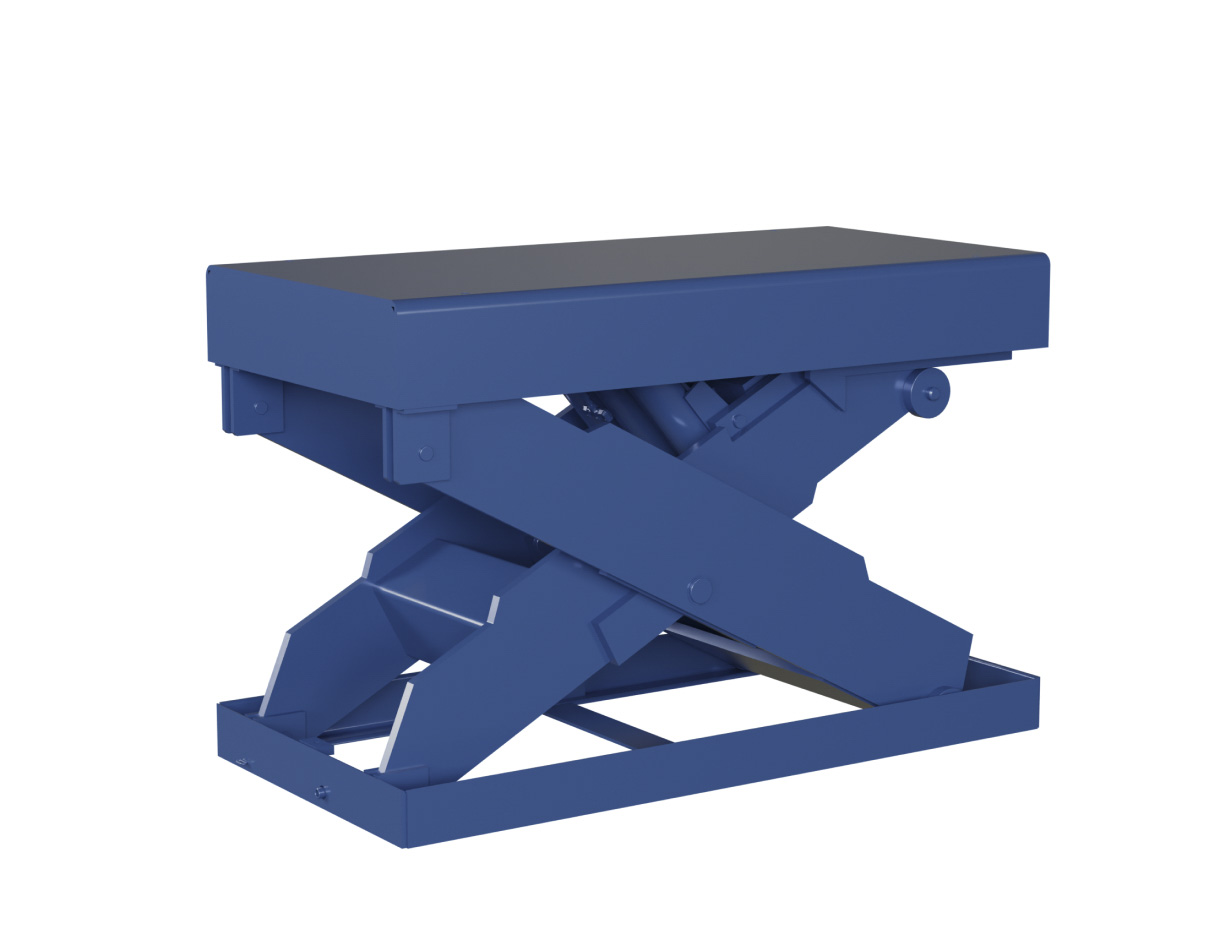
Describe how the load reaches and rests on the deck
A lift table rating must apply to the actual load arrangement. Record mass, dimensions, center of gravity and whether the load is distributed, concentrated or rolled onto the platform. Include pallets, fixtures and containers. Sufficient total capacity does not by itself establish that a small heavy fixture or off-center load is acceptable for the proposed design.
Measure pickup, working and delivery heights using the complete load carrier. Lowered height, raised height and stroke describe different aspects of fit. A table can provide the required travel while starting too high for the pickup or leaving the receiving surface mismatched. Show the transfer direction and space around both interfaces.
Compare the complete workstation cycle
Include loading, positioning, work, unloading and maintenance access. Review operator reach, controls and potential pinch or interference points with the actual proposal. A lift table positions goods unless specifically designed and approved for personnel use; it should not be treated as a general work platform for a person.
Give suppliers the same load and transfer information and ask for the applicable configuration and limitations. Compare power requirements, selected controls, service access and included installation scope. This makes the purchasing decision about a functioning workstation rather than a deck size and capacity that leave the main handling problem unresolved.
| Input | Record | Why it matters |
|---|---|---|
| Loading | Distribution, contacts, wheels and center of gravity. | Rating must cover the actual condition. |
| Heights | Pickup, work and delivery interfaces. | Travel alone does not establish station fit. |
| Geometry | Deck, projections and handling access. | The load must engage, transfer and release. |
| Operation | Controls, working access and maintenance. | The complete station needs review. |
Review checklist
- Load distribution
- Required height range
- Transfer and control arrangement
Buyer questions
Can a lift table carry people?
Only when specifically designed and approved for personnel lifting; a material table is not a substitute for an access platform.
What is stroke?
Stroke is the vertical travel between lowered and raised positions; compare both actual heights as well as the travel amount.
Can a table with enough total capacity accept a small heavy fixture?
Obtain confirmation for the actual concentrated load and its position. Total capacity does not automatically establish every contact or loading condition. Provide the fixture footprint, distribution, center of gravity and operating sequence so the supplier can identify the appropriate rating and arrangement.
How should lift-table alternatives be compared fairly?
Use the same load and loading method, actual lowered and raised heights, deck needs, duty and interfaces. Include controls, protection, documentation and installation scope. Similar capacity and travel figures can conceal different usable arrangements and should not be treated as complete equivalence.
