
Equipment buying & work planning
Mobile Scissor Lift Tables: Review Travel and Transfer Together
A mobile lift table combines load positioning with movement. Its suitability depends on the load, floor and destination as well as the lift rating.
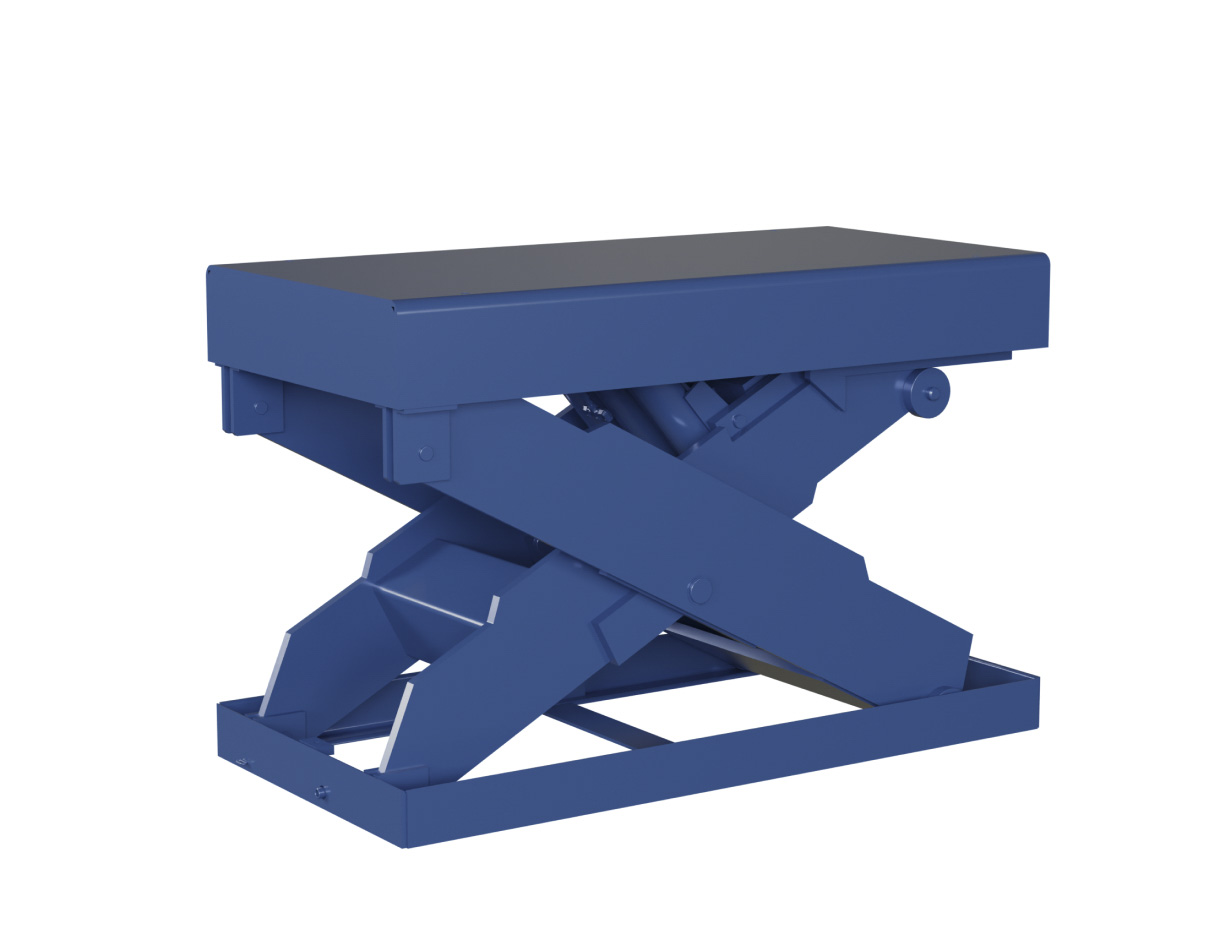
Review travel and lifting in their actual configurations
A mobile scissor lift table must support the loaded route as well as the stationary transfer. Record load mass, dimensions, distribution and carrier. Ask the manufacturer which load positions and travel conditions are permitted. Mobility does not imply that goods can be transported at any table height or over every floor condition.
Measure thresholds, turns, slopes and surface changes along the route. Include visibility, pedestrian access and how the table is secured at the station. A small deck can still have a base or load projection that controls fit. Check the complete moving arrangement, not only the platform dimensions.
Compare pickup, working and receiving interfaces
Record lowered and raised heights, transfer direction and clearance around the destination. A mobile table can eliminate one carrying step while leaving an unsuitable loading or release method. Show pallets, containers and fixtures that affect load support and underside clearance.
Use representative loaded cycles when comparing candidates and include repositioning, replenishment and return. Ask quotations to identify relevant ratings, controls, energy and maintenance requirements. This ties the purchase to a complete handling operation instead of assuming that a lifting surface on wheels automatically resolves travel and transfer together.
| Element | Record | Confirmation |
|---|---|---|
| Load | Weight, distribution and carrier. | Applicable loading and travel condition. |
| Route | Surface, turns, thresholds and visibility. | Permitted loaded movement. |
| Transfer | Actual heights and release space. | Complete pickup and delivery compatibility. |
| Work position | Securing, controls and user access. | Suitable arrangement at the station. |
Review checklist
- Load and transfer heights
- Route and mobility limits
- Braking and control arrangement
Buyer questions
Can a load be transported at any table height?
Follow the model's instructions; a lifting rating does not automatically permit travel in every raised position.
What should the supplier confirm about movement?
Request permitted load positions, travel conditions, securing method and any limits relevant to the actual route.
Why should a mobile table route be reviewed with the actual load?
Load size, distribution and position can affect visibility, maneuvering and the permitted travel condition. An empty table demonstration does not establish suitability. Provide turns, thresholds, surface and destination with the real load and ask for the model-specific approved arrangement for that movement.
What should be included when comparing mobile table proposals?
Use the same load, carrier, route, transfer heights and work cycle. Ask about applicable rating, permitted movement, securing, controls and maintenance. Similar capacity and deck dimensions do not establish equivalent handling or destination fit, so compare the complete application and scope.
