
Equipment buying & work planning
Lift Tables: Improve the Transfer, Not Just the Lift
A lift table can improve a workstation when its height range and deck suit the transfer. Raising a load is only one step in the process.
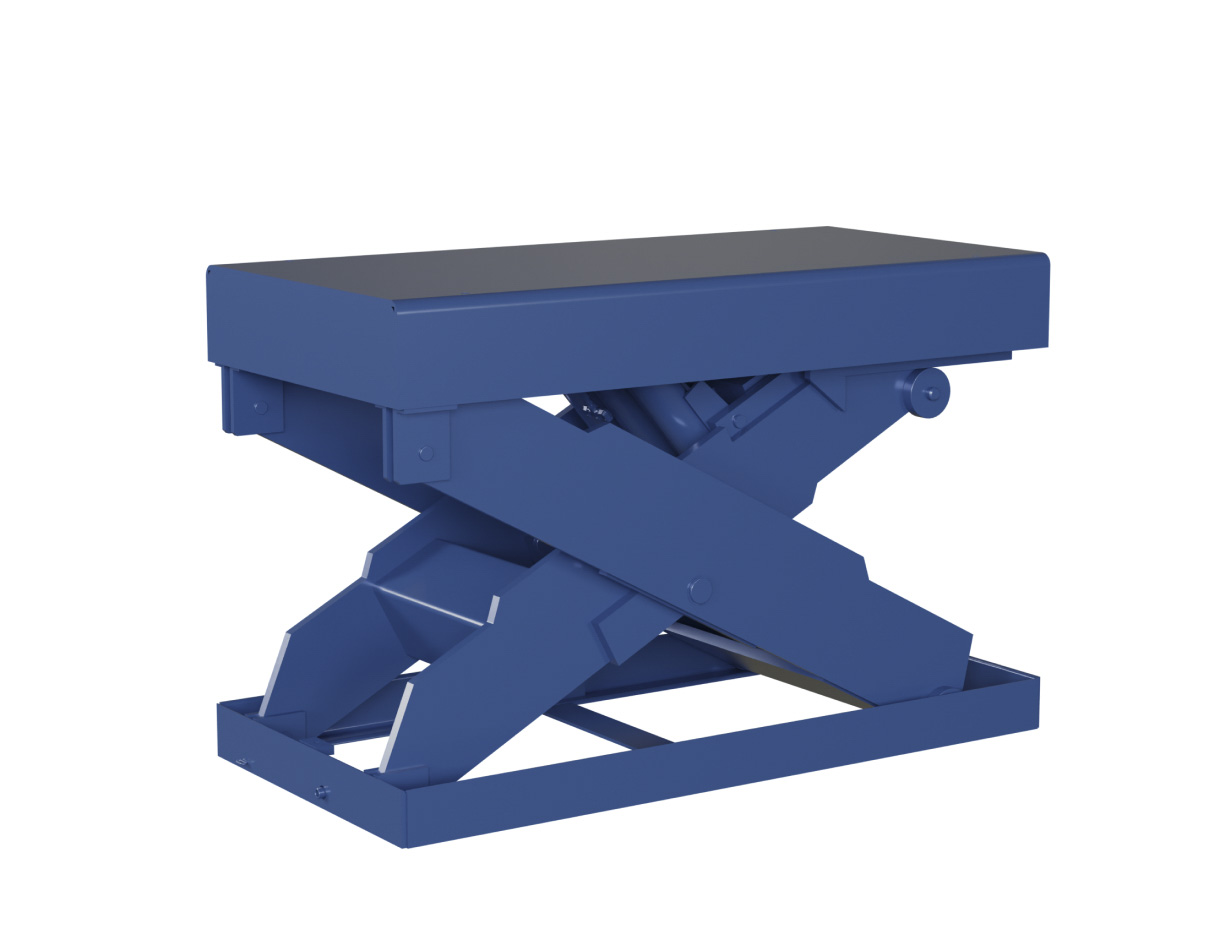
Measure the transfer rather than only table travel
A lift table can improve vertical positioning while leaving arrival or departure unresolved. Record pickup, working and delivery heights with pallets, containers and fixtures included. Describe load dimensions, distribution and orientation at each stage. Stroke alone does not establish fit if the lowered surface is too high or the destination remains mismatched.
Observe where the operator stands and how the load is reached, turned and released. Include control access and the route around the table. A different location, fixture or transfer arrangement may be needed to reduce awkward handling. Raising the load is not evidence that the complete workstation has improved.
Trial the full station cycle
Compare representative products, including the heaviest or most awkward routine load. Include loading, work, unloading, replenishment and empty-carrier return. Gather feedback from the users and check whether a local improvement creates additional effort at the connected station. Use the same task conditions when comparing candidate designs.
Write the RFQ around the measured interfaces and required outcome. Request the applicable rating, selected controls, power requirements and maintenance access for the actual configuration. This ties the investment to the transfer problem and provides a clearer basis for judging efficiency than an unsupported claim that every lift table saves time or eliminates manual handling.
| Stage | Record | Question |
|---|---|---|
| Arrival | Carrier, loading method and pickup height. | How does the load reach the deck? |
| Work | Position, orientation and user reach. | Is the task actually improved? |
| Departure | Receiving height and release method. | Does unloading remain appropriate? |
| Support | Controls, protection and service access. | Can the station be used and maintained as intended? |
Review checklist
- Load distribution
- Required height range
- Access to controls and work
Buyer questions
Does a lift table eliminate manual handling?
Not necessarily. Loading, unloading and repositioning may still require a planned handling method.
What should a table trial measure?
Observe reach, load transfer, control access, cycle time and any remaining handling difficulty across representative jobs.
How do pallets and fixtures affect required table heights?
Measure the load at pickup, work and delivery with its actual carrier or fixture. Those added dimensions change the interface even when the goods are unchanged. Compare real lowered and raised positions, not stroke alone, and confirm how handling equipment engages and withdraws at each station.
How should an ergonomic improvement be evaluated?
Observe representative tasks before and after the change, including replenishment and removal. Record user access, reach, force, controls and cycle effects with the responsible assessment process. Keep remaining issues visible rather than treating height adjustment alone as proof of a complete workstation solution.