Equipment buying & work planning
Vertical Mast Lift vs. Scissor Lift for Warehouse Work
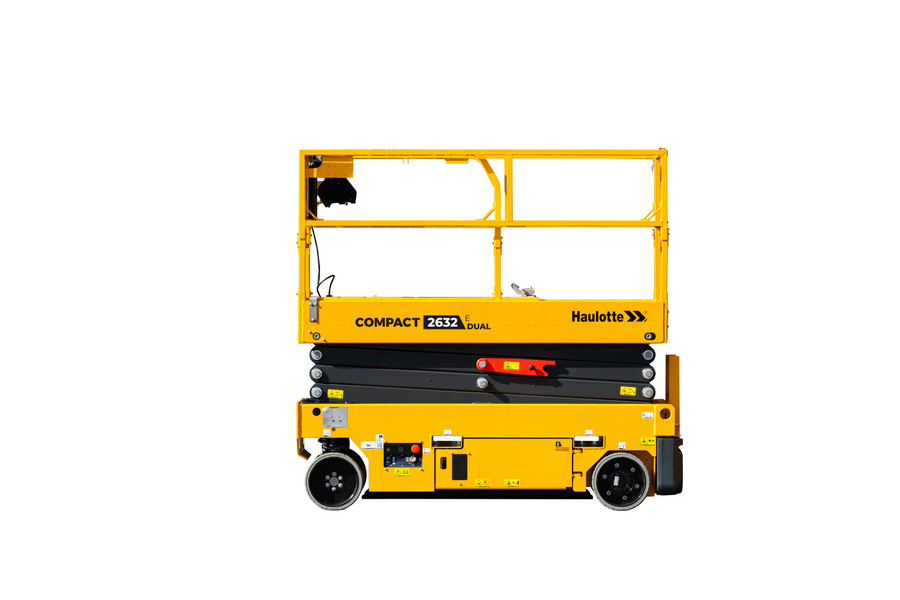
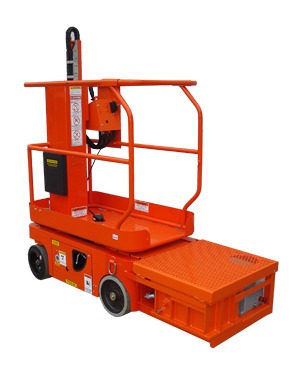
Compare the work envelope before comparing lift names. A narrow mast lift and a scissor lift can reach similar tasks while needing different floor space.
Compare usable platform space before maximum height
Vertical mast lifts and scissor lifts can serve similar overhead tasks while requiring different operating space. Start with the actual job: the number of occupants permitted by the proposed model, tools, replacement parts and the movement needed at the work point. A narrow chassis is useful only when the platform also accommodates that work within its rating and approved configuration.
Measure stowed width and height, doorway clearances, turning space and the final setup area. Then compare usable platform dimensions and any separately rated extension. Do not assume that every mast lift is single-person or that every scissor platform accepts two people. Those are model-specific capabilities, not reliable conclusions from the lifting mechanism alone.
Check floor loads and the whole maintenance route
Request the manufacturer's supporting-surface requirements and relevant wheel loads. Total machine weight alone does not describe the load imposed at each contact point. Include thresholds, floor openings, overhead services and areas shared with pedestrians or forklifts in the route review. An indoor warehouse location does not remove the need to assess the actual surface and operating conditions.
Compare retrieval, positioning, task time, charging and storage over a representative shift. A compact lift that takes repeated trips for tools may be less useful than a larger approved configuration; a larger machine may be impractical on the route. A fair RFQ gives both suppliers the same tasks and asks them to identify supported applications and exceptions.
| Decision | Information to compare | Avoid this shortcut |
|---|---|---|
| Travel access | Actual stowed dimensions and the measured door-and-turn route. | Treating nominal chassis width as the whole access requirement. |
| Working space | Usable platform, approved occupants and tool/material arrangement. | Assuming every scissor deck accepts two people or every mast is single-person. |
| Supporting surface | Model-specific wheel loads, surface requirements and site review. | Comparing machine weight alone with a general floor description. |
| Daily use | Repositioning, charging, storage and task duration. | Buying on maximum height while ignoring the normal workflow. |
Review checklist
- Stowed width and height
- Required platform space
- Charging location and shift pattern
Buyer questions
Is the narrower lift always better?
Only if it also provides the required capacity, reach and working space without exceeding the site's operating limits.
Which floor information should I request?
Ask for the model's relevant wheel loads and supporting-surface requirements, then have the responsible facility team review them against the actual route.
Does a mast lift replace a scissor lift in a narrow warehouse?
Only if its working envelope, platform space, rated load and operating limits cover the intended tasks. A narrow route is one constraint. Check the complete job, including materials and time at the work point, before treating the configurations as interchangeable.
Can a larger extension deck solve a platform-space problem?
Review the exact extension and its approved loading and operating conditions. An extension can change the available work area, but it does not automatically increase total capacity or make an obstructed base location suitable. Use the candidate model's instructions and drawing.
References & further reading
Use the applicable requirements and the specific equipment instructions for your work. General references do not establish approval of a product or installation.