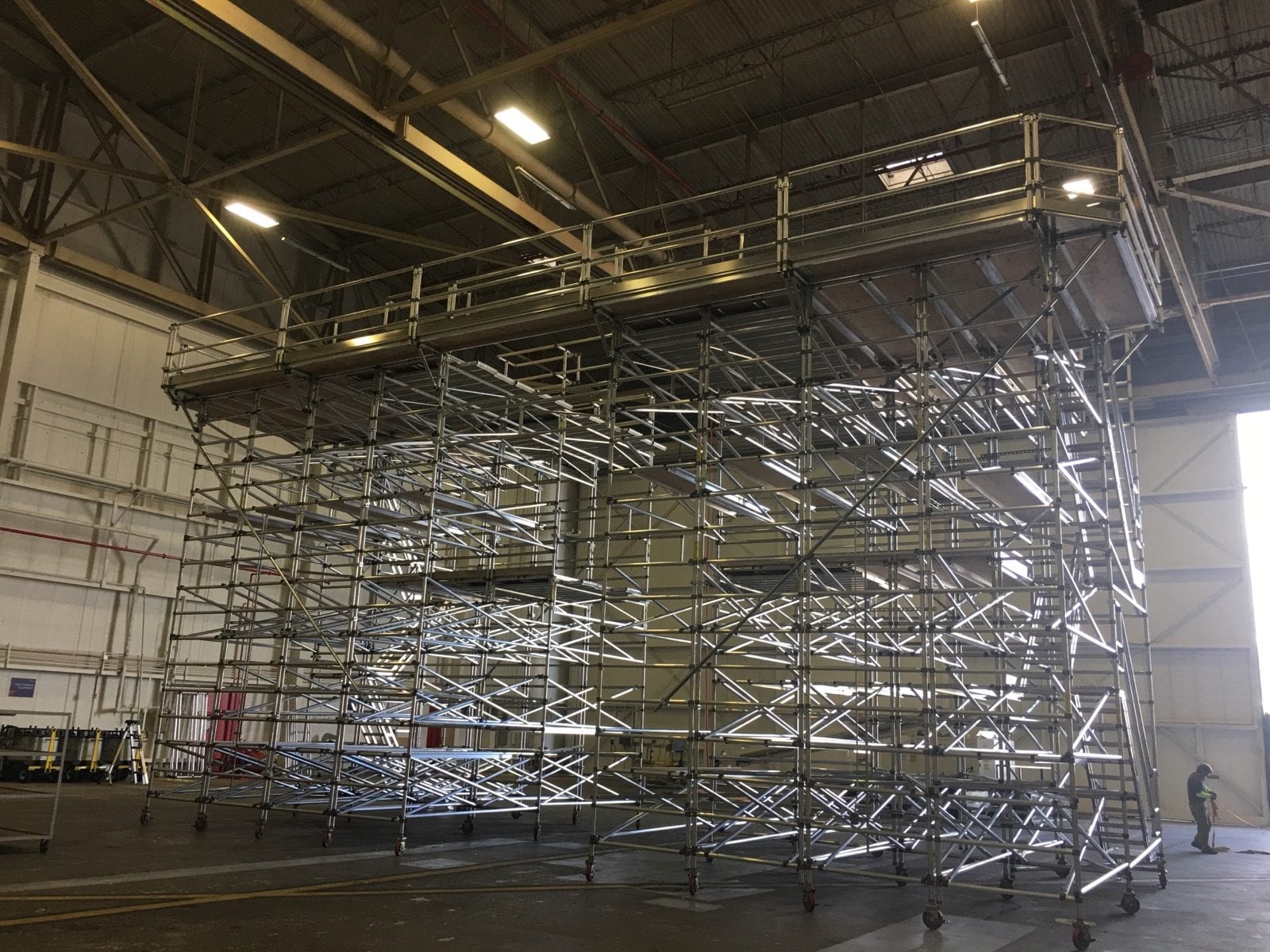
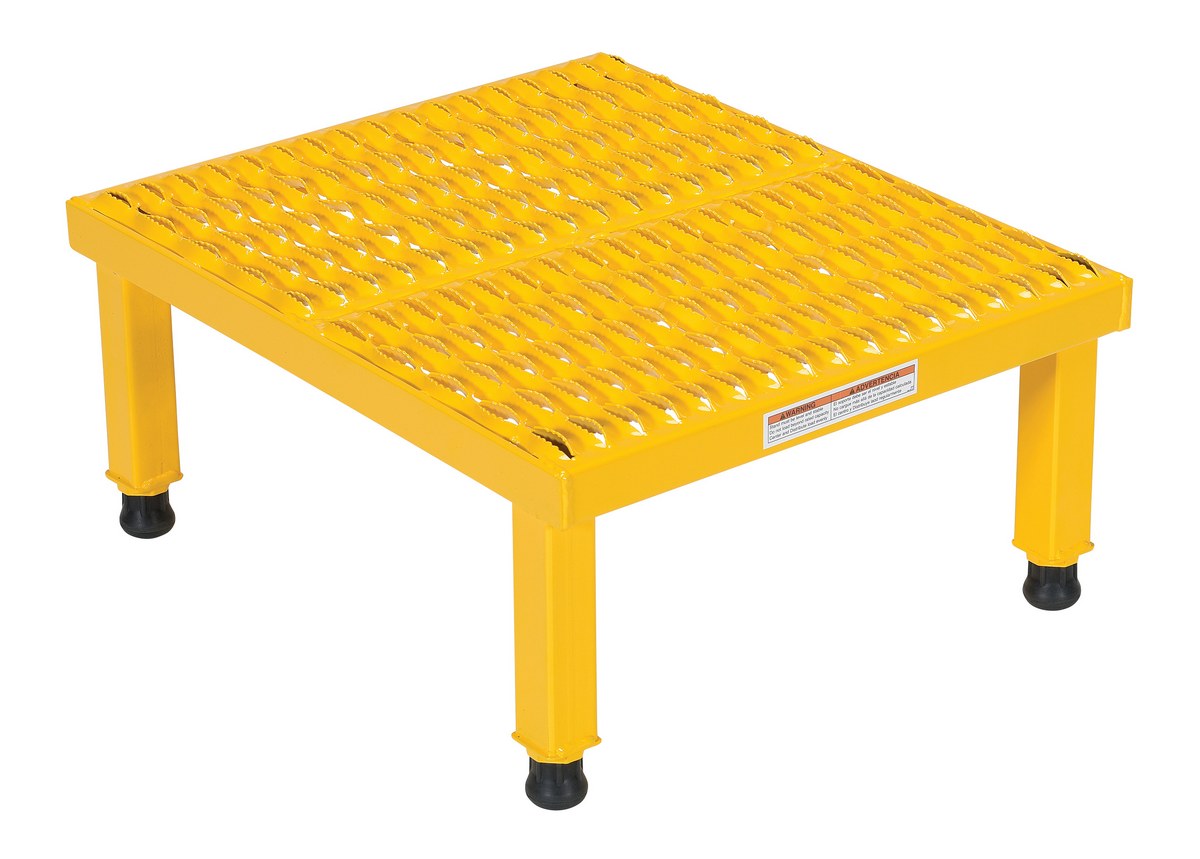
Equipment buying & work planning
Mobile Platforms for Aviation Maintenance: Evaluate the Workflow
A mobile platform is useful when it can be repositioned between defined service locations without compromising fit. Compare setup time and clearances across the maintenance sequence.
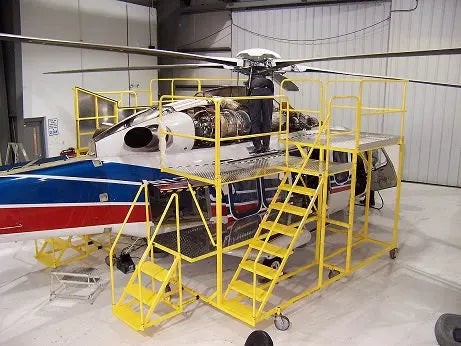
Measure the complete platform movement
A mobile maintenance platform should improve access without creating a difficult positioning task. Record where it starts, the route to the aircraft, the work position and the return to storage. Include doors, adjacent ground equipment and turning space. Time retrieval and securing as well as work beside the aircraft; a short task can be dominated by setup.
Review deck elevation, access direction, gaps, rails and component movement for the actual aircraft configuration. Mobility does not establish aircraft fit. Check the platform's approved movement and occupation rules and the surface along the route. A unit that can be rolled through an open hangar may still be impractical in the working layout.
Trial shared use before relying on turnaround savings
Compare representative service tasks using the proposed arrangement. Record positioning, inspection, tool access, work and removal, including contact or obstruction concerns. Ask whether sharing the unit creates waits between crews or repeated adjustment. A smaller equipment inventory is not necessarily a more available one.
Use the trial to define the RFQ and the required aircraft coverage. Compare selected options, storage, inspection access and support on the same scope. Keep any productivity estimate tied to measured work rather than a general turnaround claim. This gives maintenance management a basis for deciding whether mobility, dedicated stands or a mixed arrangement best supports the schedule.
| Measure | Include | What it reveals |
|---|---|---|
| Setup | Retrieval, positioning, securing and inspection. | Whether the access benefit survives preparation time. |
| Task fit | Aircraft configuration, working edge and tools. | Whether the proposed stand supports the actual job. |
| Availability | Shared demand and movement between aircraft. | Whether one unit creates scheduling conflicts. |
| Return | Removal, storage and route clearance. | Whether saved work is shifted to another stage. |
Review checklist
- Hangar travel route
- Service-point dimensions
- Locking and inspection procedure
Buyer questions
Will mobile platforms automatically improve turnaround?
Only if measured setup and access improvements outweigh repositioning, storage and coordination costs.
What if a platform fits but takes too long to position?
Review storage, approach and task allocation before assuming a different platform size is the only solution.
How can we assess an advertised turnaround benefit?
Ask what task and conditions support the claim, then compare representative local work. Measure the complete access sequence and note competing demand or unusual conditions. Do not convert a supplier's example into a guaranteed result for a different aircraft, layout or maintenance schedule.
When is a shared mobile stand a poor choice?
It may be unsuitable where interfaces differ, routes are constrained or simultaneous tasks compete for it. Compare dedicated arrangements and approved alternatives using the same workload. Record task coverage and setup requirements instead of assuming mobility automatically reduces equipment or labor needs.